
Ice Performance Lab · Hockey Health
Knee Health
Follow changes in knee function, understand the questions behind an assessment and plan a return that reflects hockey demands.
← Explore Hockey HealthKnow the region
Structure, symptoms and function
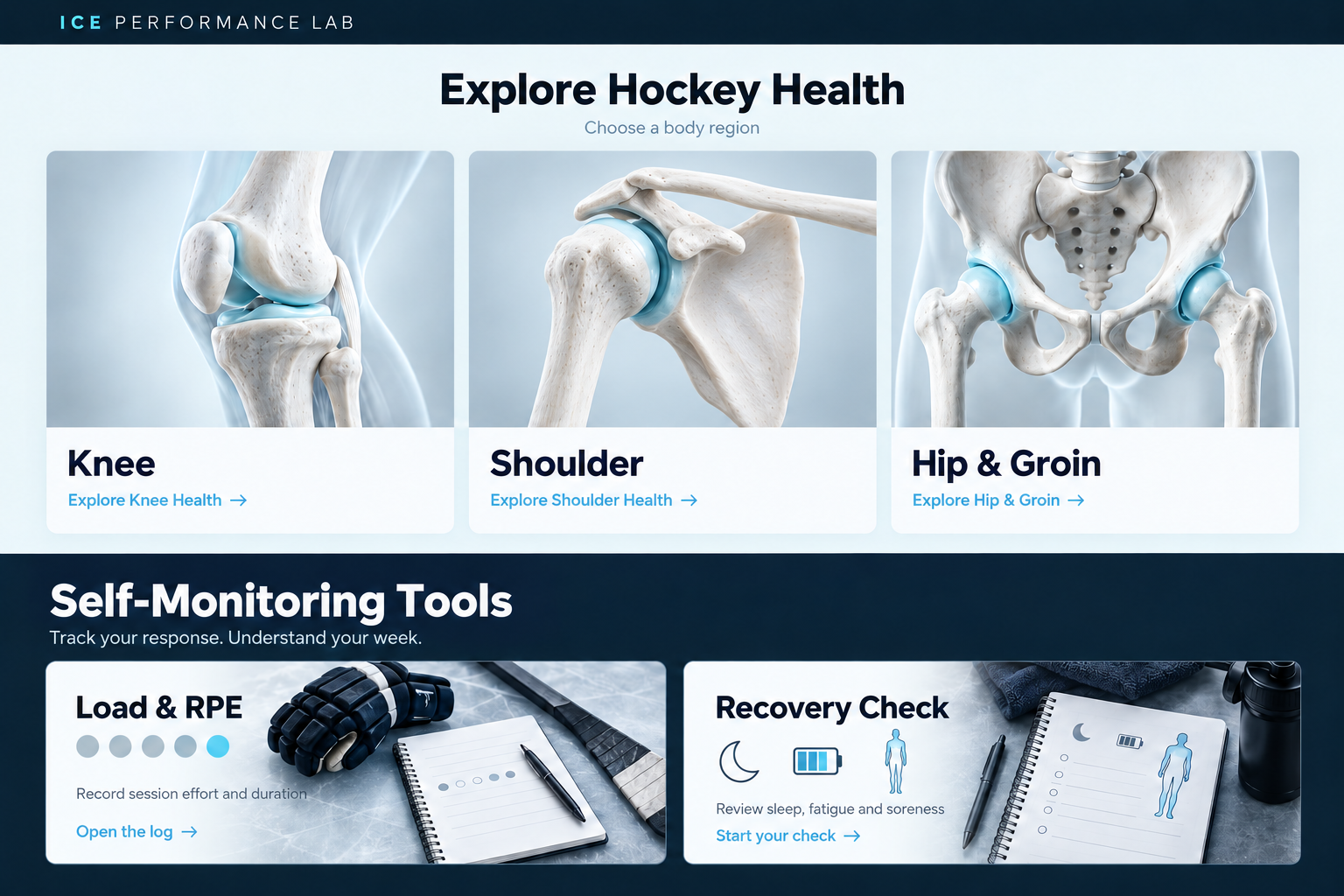
The knee brings together the thighbone, shinbone and kneecap. Ligaments support stability, the menisci contribute to the joint interface, and the surrounding muscles help control movement. Different structures can produce similar symptoms; the location of pain alone cannot identify an injury.
Questions for the assessment
What deserves attention?
Ligaments & stability
A twisting event, contact injury or a sense of giving way needs a history and examination. The next step depends on the structure involved and the degree of functional loss.
Meniscus & joint symptoms
Swelling, catching or difficulty moving the knee deserve attention. Note whether a symptom followed a specific event or built up across repeated activity.
Anterior knee symptoms
Pain around the kneecap or tendon can affect training. Record which tasks provoke it and how the knee responds later and the following morning.
Self-monitoring
Observe and document
Record swelling, change in movement, instability, the triggering activity and the next-day response. After a new injury, marked swelling, inability to bear weight, a locked knee or deformity calls for prompt medical assessment. Do not provoke the knee with self-administered ligament or meniscus tests.
Bring a useful record: what happened, what changed, what you could do before, and what happened after the last session.
Reference: AAOS · Common Knee Injuries. Educational overview; an individual assessment determines diagnosis and treatment.
Return to ice
Progress by function and exposure
The care team combines symptoms, movement, strength and functional testing with progressive skating, stopping, turning and hockey exposure. Everyday comfort is only one part of the picture.
Explore the Return to Play pathway →