
Ice Performance Lab · Hockey Health
Shoulder Health
Bring movement, strength, stability and contact readiness into the same conversation.
← Explore Hockey HealthKnow the region
Structure, symptoms and function
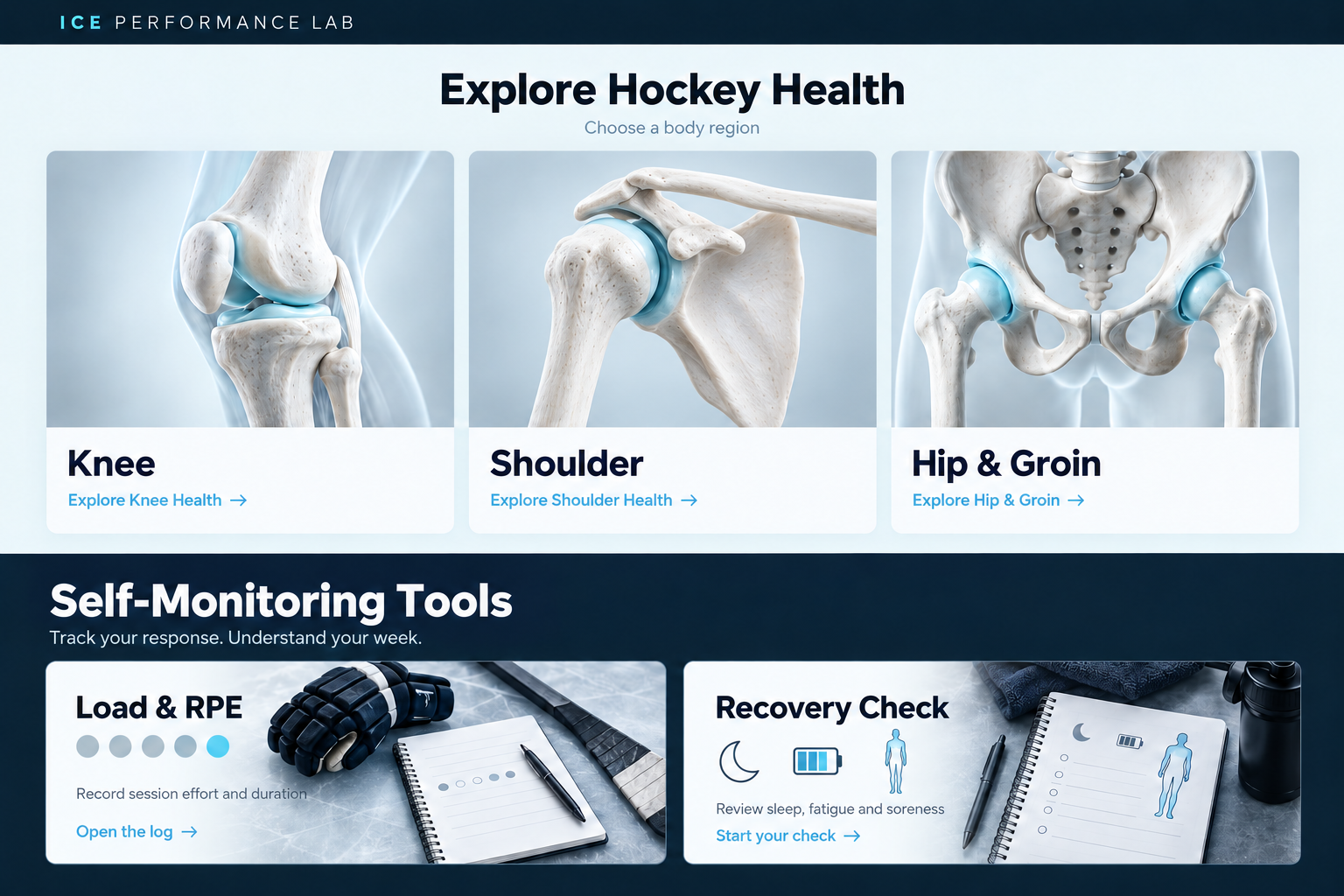
The shoulder complex includes the humerus, scapula and clavicle. The glenohumeral and acromioclavicular joints have different roles, and symptoms can arise from tendons, ligaments or joint structures. An illustration helps orient the discussion; an examination identifies the clinical problem.
Questions for the assessment
What deserves attention?
Instability
A slipping sensation or a prior dislocation changes the assessment. Do not deliberately reproduce instability as a home test.
Rotator cuff & function
Pain, weakness and reduced movement can affect reaching, lifting and sport tasks. Record the task and whether the symptom is new or persistent.
AC joint & contact
A direct impact can affect the top of the shoulder. Comfortable daily activity does not establish readiness for boards, falls or contact.
Self-monitoring
Observe and document
Record pain location, weakness, movement loss and the mechanism of any impact. A suspected dislocation, obvious deformity or a new neurovascular concern requires urgent assessment. Do not attempt to put a shoulder back into place yourself.
Bring a useful record: what happened, what changed, what you could do before, and what happened after the last session.
Reference: AAOS · Common Shoulder Injuries. Educational overview; an individual assessment determines diagnosis and treatment.
Return to ice
Progress by function and exposure
Progressive strength and function are considered alongside confidence, stick handling and contact exposure. The treating clinician sets the restrictions and progression for the diagnosed injury.
Explore the Return to Play pathway →