
Ice Performance Lab · Hockey Health
Hip & Groin Health
A regional view of symptoms, skating exposure and the response to training, with a separate lens for goaltenders and developing players.
← Explore Hockey HealthKnow the region
Structure, symptoms and function
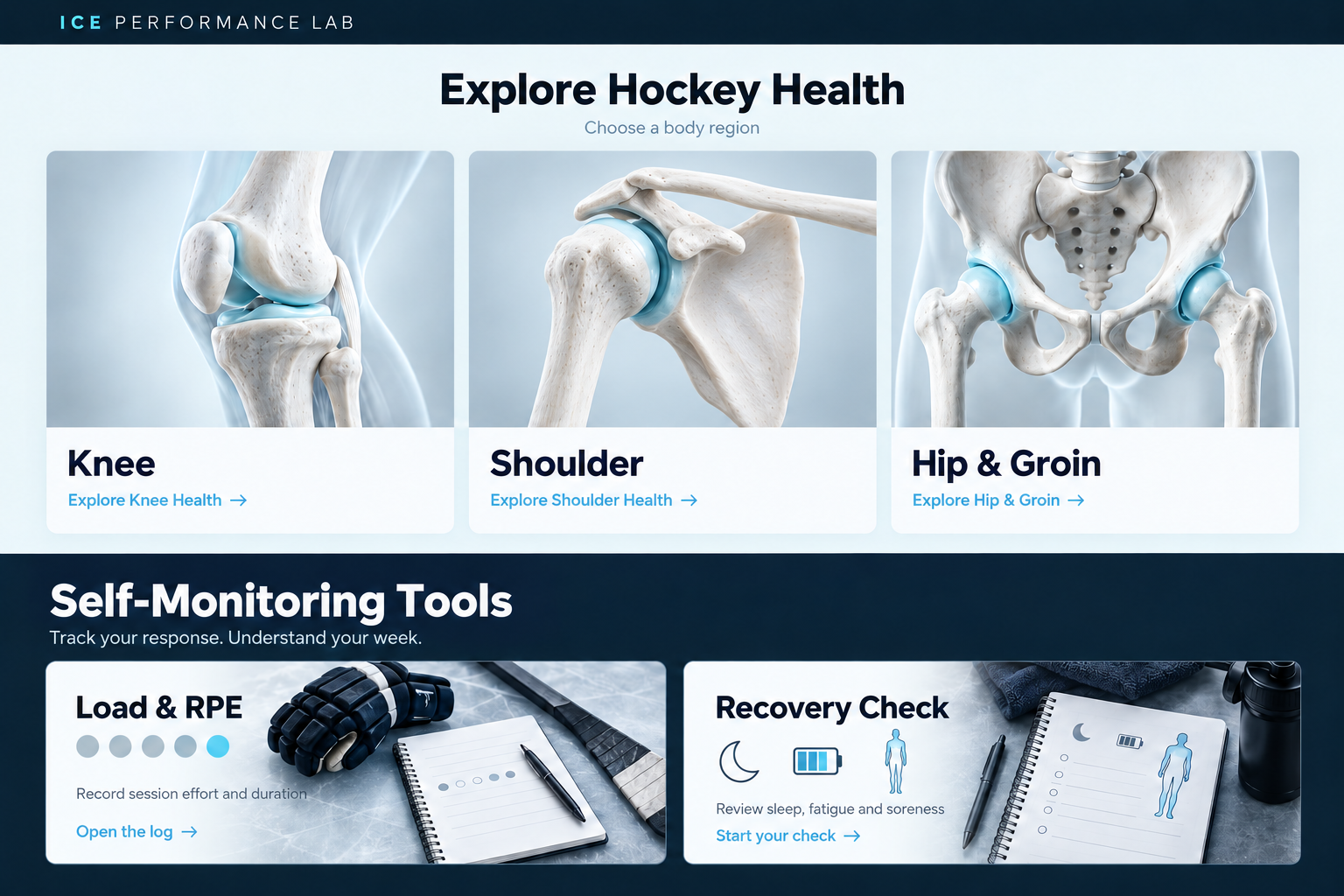
The hip is the joint between the femoral head and pelvis. The surrounding groin region includes muscles and tendons as well as other potential sources of pain. Hip and groin symptoms are not interchangeable diagnoses; the history and examination matter.
Questions for the assessment
What deserves attention?
Muscle & tendon symptoms
A sudden strain and gradually developing irritation can present differently. Note whether the problem began with one event or accumulated over sessions.
Movement & exposure
Record which movements and skating tasks bring on symptoms and whether movement becomes limited. Avoid forcing a painful end range to test yourself.
Player context
Previous injuries, a change in training and growth-related concerns belong in the assessment. Goaltender exposures should be documented separately from skater workloads.
Self-monitoring
Observe and document
Record the location, onset, movement limitation and response after exposure. Persistent pain or increasing difficulty moving the hip or leg needs medical review. Severe pain after trauma or inability to bear weight needs prompt assessment; groin pain with acute testicular or abdominal symptoms needs urgent medical attention.
Bring a useful record: what happened, what changed, what you could do before, and what happened after the last session.
Reference: AAOS · Hip Strains. Educational overview; an individual assessment determines diagnosis and treatment.
Return to ice
Progress by function and exposure
Build back the tasks that matter to the player under an individual plan. The response to controlled movement, skating and repeated position-specific exposures is reviewed before increasing demands.
Explore the Return to Play pathway →